Showing posts with label Puddings/Desserts. Show all posts

Monday, 9 June 2008

Cycling Fuel

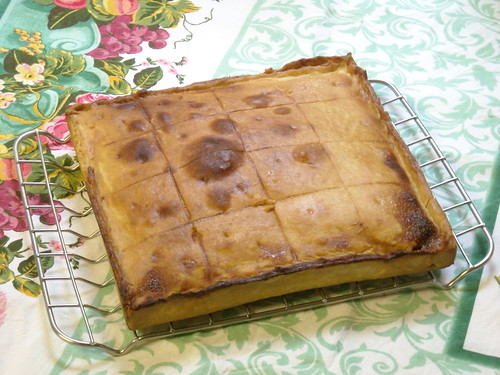
Today's recipe is another dessert which I justify the sugar content of by doing over 100km on my bike on a Sunday morning. I really enjoy my cycling and to do it you need a good amount of carbohydrate in reserve so something such as these Butterscotch Squares is just the thing to keep the legs turning (it doesn't travel well though, so I have to load up beforehand).

The recipe is another one of those passed down to me by my mother and, probably, from her mother before that. I may have already mentioned that I come from good baking stock, so there are a number of these recipes that I really associate with my childhood and which are, to me, quintessentially English.

This one refers again to shortcrust pastry, the simplest of pastries and something I have posted on before. Though if you are still too worried/lazy to make it yourself it is available ready-made in most supermarkets. The key to getting a quality product with this recipe is to make sure the egg is well beaten in and to put plenty of holes in the top to stop the air getting trapped inside and lifting the pastry off the filling (something I didn't manage on this occasion as I added the glaze after the holes; schoolboy error). Despite this it is a quick and easy recipe, one to do if the oven is already on for some bread, as I did, and will still taste great even if the pastry is a little crumbly, puffy or soggy. Make sure you grease a square tin well to make it easy to get out afterwards. It is obviously not imperative to use a square tin, though with 'squares' in the name it does ask for it, chuck it into whatever receptacle you have to hand that can withstand 200C and has a similar area.

Till next time: keep up the baking, keep it traditional and try something new (to you).

Tuesday, 3 June 2008

Piece of Cake: How to Cheat at Baking

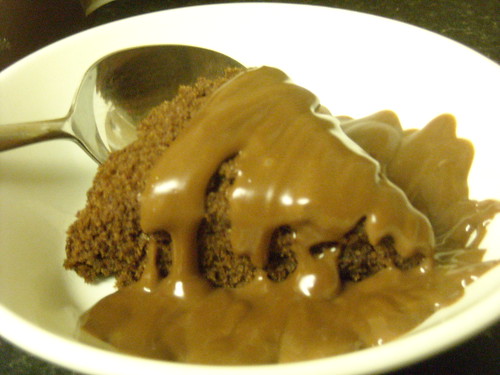
So you've had a few people over for dinner and you haven't made a pudding. It would normally take at least half an hour to make a chocolate sponge, but I have managed to get it down to less than 16mins and make a party piece out of the process.

Some may say that this isn't really baking, to them I say, 'move with the times.' Using a microwave, the main time saving device in this recipe, is no different than using a modern oven would be to traditional bakers of the past.

This recipe incorporates a simple chocolate sauce because one of the disadvantages of this technique is that the cake can be a little dry. The other disadvantage (or you could look at it as an advantage, depending on your point of view) is that it doesn't keep at all and will need to be eaten immediately after 'baking'. Don't worry, get this out at the tea table and there will not be any left for the birds, I assure you.

So if you thought that baking was a long and complicated process try this one, I challenge you to do a sub 16min cake!

Brevity in baking.

Friday, 30 May 2008

From a time before diets...

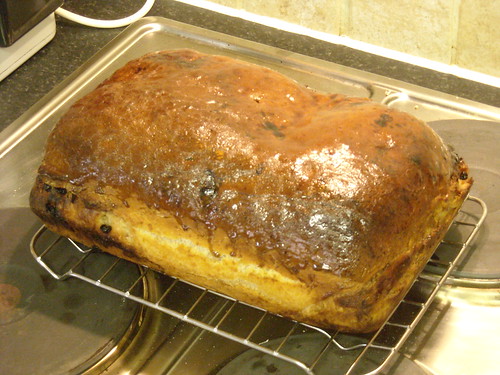
My mother's production of this cake for a family party last week reminded me that I had not posted the recipe since I made it myself a month or so ago, and of its popularity (it all went in less than 20 mins).

You can make no bones about the serious health implications of eating this delicious treat, the name gives the game away: Lardy Cake. As the recipe shows it really does contain a lot of lard and, as this is saturated fat and not something the doctor would suggest you eat a lot of, it is not going to do anything for your waistline. There is also a considerable amount of sugar in there, your dentist would probably rub his hands together with glee at the sight of warm syrup being spread over the top in spoonfuls, but it is not a Lardy Cake without it.

Why am I telling you all this? Because we all know that the nicer something is the less healthy and generally good for you it is going to be, and this is the perfect example. The preceeding warnings only confirm that this cake is going to taste delicious and that it should be a regular, though not frequent, addition to your baking (take note health warning writers, there is a difference between these two concepts!).

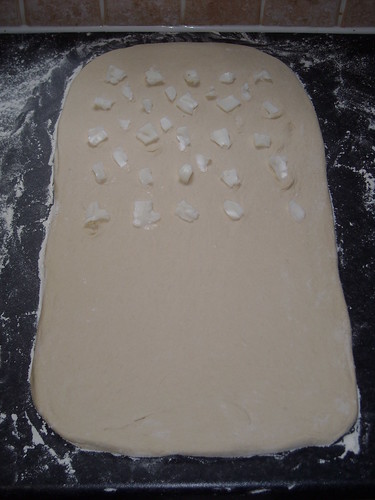
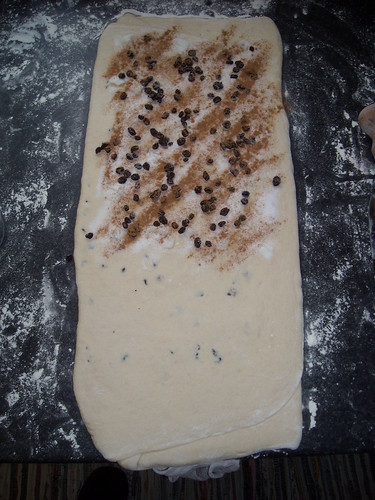
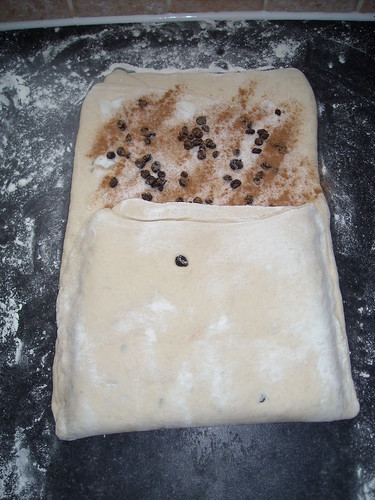
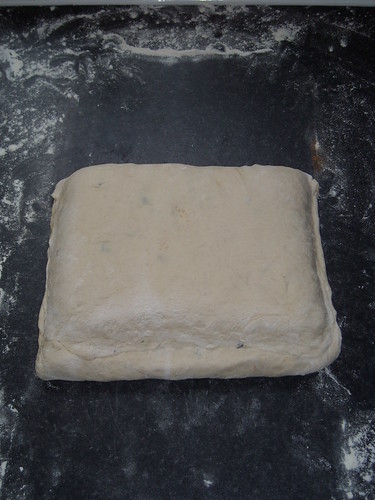
The rolling and folding does take some getting used to, it's similar to puff pastry, so I've added some pictures below to give you an idea of the sequence. The main things are to make sure the rolling is even and the edges are sealed properly to trap the air; that way it will rise happily and evenly when baking.


Don't eat it all at once.

Wednesday, 20 February 2008

Sticky, sticky goodness

I'm getting a bit lame at posting things as soon as I do them and this one has taken almost a week to reach the online community. Apologies, I shall try and get my work/personal life priorities realigned.

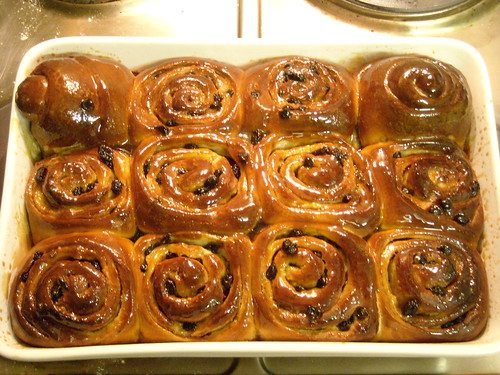
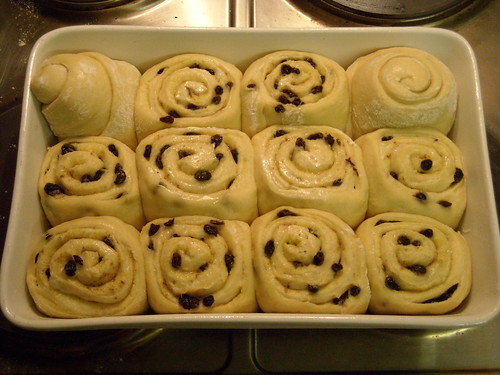
So this was last weds/thurs creation (the overnight technique strikes again) and is a well known English favourite, Chelsea Buns. For those of you who haven't had the pleasure of sampling their delights it is basically a sweet yeasted bread containing currants and spices and covered all over with a sticky sugar glaze; it should look something like this:

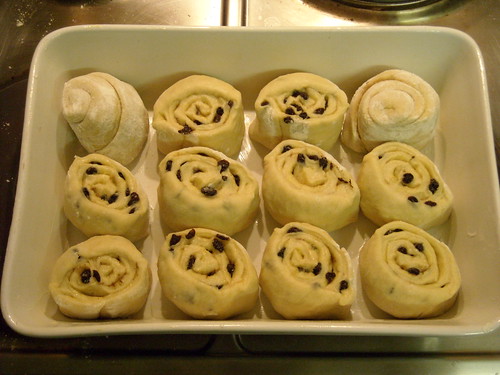
During the preparation it is important to space them apart enough to allow for rising, but not so far that they don't join together when they have risen sufficiently. There are some extra pics below to illustrate this. The glaze is also a very important element to this recipe, although they taste good without it (and might be better for those watching their waistlines), they are a little dry and the glaze really makes them sweet and special. Make it using two tablespoons of Golden Syrup to one large teaspoon treacle (molasses to our American cousins), and heat that in a mug in a microwave or pan on the hob to make it nice and runny so it mixes together and brushes over the hot buns easily.


This recipe makes twelve buns, which is a bit much for just two people as they don't keep particularly well, so either decrease the measures and the dish they go in or, as I did, take the rest to work and be your colleagues' favourite person for a day.

Stick that in your lunch box and munch it.

Monday, 11 February 2008

A Well Baked Dessert

After a week of the 'Old Favourite' and raiding the stocks in my freezer, Sunday dinner brought the opportunity for baking another dessert that ranks high amongst the classics of English baking. Bakewell Tart is a delicious almond flavoured pudding that always goes down well with family and guests alike, and this one was no exception. Having a slightly larger topping than is traditionally used, and never skimping on the jam filling, makes it something special to finish off a meal with. Its quick preparation also means it is possible to prepare it as the rest of the dinner is cooking away, and it can always be left in the fridge for a few minutes until the oven is ready. The base is a simple shortcrust pastry, which I have covered here before, so there really is no excuse for not making the entire thing from scratch (even I buy the strawberry jam though!).

Over the course of the weekend I also made a couple of focacce (Italian plural of focaccia, in case you're wondering) and also some chocolate orange cup cakes for a birthday party I was attending; these are simply the usual sponge mix divided into baking cases and baked at the same temperature, but for just 10-15mins.

So although there has not been a lot of note over the last week, I'm sure you'll all be glad to hear that I continue to bake on a regular basis.

Go thou and do likewise.

Wednesday, 23 January 2008

Shoo-Fly Pie

I haven't been baking a lot of puddings recently, just a few cakes every now and then, so my blog has been a bit devoid of sweet treats. This is starting to be remedied with my latest offering, and we are dipping our toes into the world of pastry at the same time.

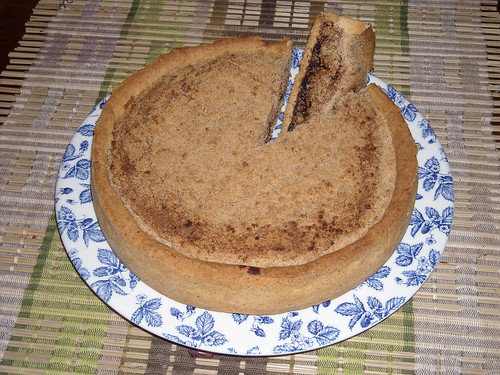
Shoo-Fly Pie is perhaps my favourite non-chocolate pudding and this recipe has been passed down through my family for some generations. It is a cross between a pie and a crumble, with a dried fruit filing squeezed between a pastry base and a crumble topping. To make it you will first need to have some shortcrust pastry, perhaps the simplest form of pastry, which you can either buy or, as you have lots of flour in your house and it only takes a minute, just follow my simple instructions.

Both these recipes use the 'rubbing in' technique, where the fats and flours are usually rubbed together using fingertips. If, like me, you don't like this method because it gets under the nails, the fats melt from your warm hands or it's just a pain and strain on the fingers, then you can work the two together with a fork (or even in a food processor) which is much easier. It may take some time for you to get used to the quantity of water needed to make a good pastry, but you can't go far wrong, adding flour or water as necessary to make a workable consistency will always provide a perfectly edible pastry. I use self-raising flour because I think it is slightly more forgiving and makes a lighter pastry than the plain variety, but either is acceptable. Leaving it for a few minutes in the fridge always improves it's performance, especially after lining trays, and prevents it shrinking too much during baking.

Once you've got the pastry everything is reasonably straightforward and according to the recipe, my most common error is forgetting to add the spices to the dry flour, which makes it difficult to mix them in later. I'm sure you will not be disappointed with the results, it always goes down well with visitors to my house, many of whom have never heard of/tasted it before.

Sweet.